
Community
Sunny skies and mid-80s ahead before a cold front
By Rafael Torres
Advertisement · Why this ad?
Sophia is a seasoned journalist with over 15 years of experience in community reporting. A graduate of the University of Texas at Austin, she has previously worked at the Rio Grande Guardian and NPR's Texas Newsroom. Her passion for storytelling and commitment to local voices define her work.
More from Sophia →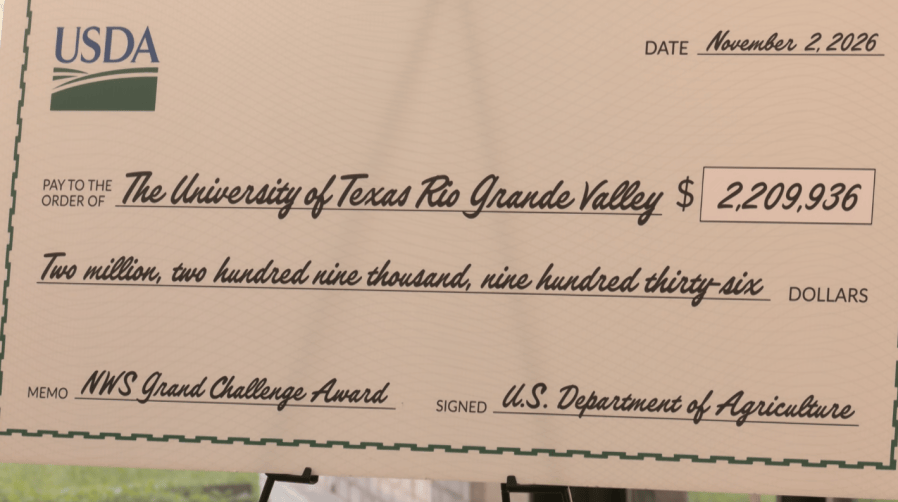
On a sunny Monday morning, the campus of the University of Texas Rio Grande Valley (UTRGV) in Edinburg buzzed with excitement as Monica De La Cruz stepped forward to deliver a message of hope. The air was filled with anticipation as she announced the awarding of a $2.2 million federal grant aimed at combating the New World screwworm, a pest that poses a significant threat to livestock and agriculture in the region. This moment was not merely about funding; it was a testament to the community's resilience and commitment to safeguarding its agricultural heritage.
Monica De La Cruz, representing the U.S. Department of Agriculture, presented the grant at a ceremony on the Edinburg campus, marking a pivotal moment for local agricultural research. The New World screwworm, notorious for infesting livestock, has long been a concern for farmers and ranchers in the Rio Grande Valley. The funding will enable UTRGV researchers to develop innovative strategies to control this pest, which can cause severe economic damage to the livestock industry.
Dr. John G. A. Hargrove, a leading entomologist at UTRGV, expressed his enthusiasm for the grant, stating that it would significantly enhance their research capabilities. "This funding allows us to explore new methods of pest control that are environmentally friendly and sustainable," he said. The grant will support a multi-disciplinary team of scientists dedicated to understanding the biology and behavior of the screwworm, ultimately aiming to reduce its impact on local farms.
As De La Cruz highlighted the importance of this initiative, she reminded attendees of the broader implications of such research. Protecting livestock is not just about economics; it’s about preserving the way of life for families whose livelihoods depend on agriculture. The grant signifies a collaborative effort between federal agencies and local institutions to ensure the future of farming in the region.
The announcement of the grant was met with enthusiasm from local farmers and agricultural advocates. Many expressed relief that federal support was being directed toward a problem that has plagued the region for years. "This funding is a game-changer for us," said local rancher Maria Gonzalez. "We’ve been struggling with screwworm infestations, and it’s devastating for our livestock and our families. Knowing that there is a team working on solutions gives us hope."
The community's response underscores the interconnectedness of agricultural health and family stability. Families like the Gonzalezes have deep roots in the Rio Grande Valley, with generations relying on farming and ranching. The financial strain caused by pests like the screwworm can lead to tough decisions, impacting not just the farms but the entire community fabric.
In addition to ranchers, local agricultural organizations are rallying behind this initiative. The Rio Grande Valley Farmers Union has pledged to support UTRGV's research efforts, recognizing the potential for innovation that can arise from this collaboration. "We believe that by working together, we can find solutions that benefit everyone involved in agriculture," said union president Javier Martinez.
The significance of this research extends beyond immediate pest control. The New World screwworm has historically led to devastating economic losses for the livestock industry, particularly in regions like the Rio Grande Valley where agriculture is a cornerstone of the local economy. The potential for outbreaks can lead to increased costs for farmers, who may need to invest in treatments or face the loss of livestock. This grant not only aims to mitigate those losses but also seeks to enhance the long-term sustainability of farming practices in the area.
The economic implications of effective screwworm management are profound. The livestock industry in the Rio Grande Valley supports thousands of jobs, from ranching to meat processing, and contributes significantly to the local economy. By investing in research to combat the screwworm, UTRGV is playing a crucial role in protecting these jobs and ensuring that families can continue to thrive in their agricultural pursuits.
With the grant secured, UTRGV is poised to initiate research projects that will delve into the biology of the New World screwworm. This will include studying its lifecycle, reproductive habits, and potential vulnerabilities that can be exploited for pest control. The goal is to develop strategies that are not only effective but also sustainable, ensuring that the environment is preserved while protecting local farmers' interests.
Dr. Hargrove and his team plan to collaborate with other institutions and agricultural experts to maximize the impact of their research. They aim to create educational programs that will inform local farmers about best practices for managing screwworm infestations, thereby fostering a community-wide approach to pest control.
As the research progresses, the community can expect to see advancements in pest management techniques that could revolutionize how local farmers deal with infestations. The hope is that these efforts will not only mitigate the immediate threat of the screwworm but also enhance the overall resilience of the agricultural sector in the Rio Grande Valley.
Moreover, the success of this project could lead to further funding opportunities, allowing UTRGV to expand its research initiatives and continue addressing agricultural challenges faced by the community. The collaboration between federal agencies and local institutions is a promising model for future projects.
Local farmers can access a wealth of resources and support through various organizations, including the Texas A&M AgriLife Extension Service, which provides educational programs and research-based information to help manage pests effectively. Additionally, the UTRGV Agricultural Research Center offers workshops and seminars focused on sustainable farming practices.
Farmers are encouraged to stay informed about the latest developments in pest management and to participate in community discussions about agricultural health. By fostering a spirit of collaboration and knowledge-sharing, the Rio Grande Valley can build a stronger agricultural community that supports its families and preserves its traditions.
The awarding of this $2.2 million grant is more than just a financial boost for UTRGV; it symbolizes a commitment to the agricultural community of the Rio Grande Valley. As the research unfolds, it will be essential for community members to remain engaged and supportive of these efforts. Together, they can ensure a thriving agricultural sector that honors the hard work and dedication of local families.
In a world where challenges often seem insurmountable, this initiative serves as a reminder of the power of collaboration and the importance of investing in the future. With the right resources and a unified community, the fight against the New World screwworm can lead to a brighter tomorrow for all.
As UTRGV embarks on this significant research journey, engaging the local community will be paramount. Plans are in place to host informational workshops and town hall meetings where farmers can voice their concerns and share their experiences with screwworm infestations. These sessions will not only facilitate knowledge exchange but also empower farmers to take proactive measures in pest management.
Furthermore, UTRGV intends to collaborate with local schools to incorporate agricultural science into the curriculum, fostering a new generation of agriculturalists who understand the importance of sustainable practices. By educating young minds about the challenges and solutions in agriculture, the community can nurture future leaders who will continue the legacy of farming in the Rio Grande Valley.
The local agricultural community is encouraged to actively participate in this initiative, whether by attending workshops, providing feedback on research directions, or collaborating with UTRGV researchers. The success of this grant-funded project hinges on the involvement of those most affected—the farmers and ranchers whose livelihoods depend on the health of their livestock. By coming together, the community can create a robust network of support that enhances agricultural practices and ensures the sustainability of their way of life.
By Rafael Torres

By Sophia Martinez

By Rafael Torres

By Carlos Mendez